
INTRODUCTION
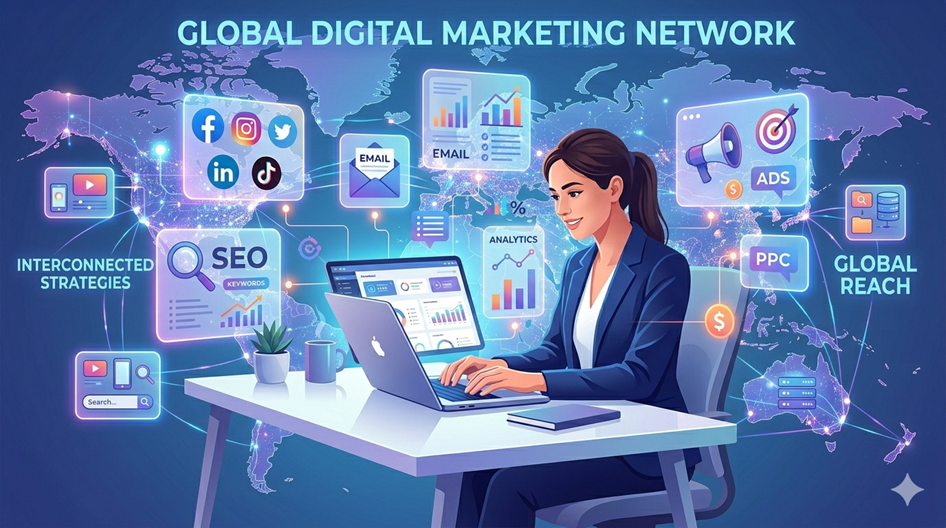
What if I told you most people searching for What is digital marketing in simple words never get a clear answer.
Frustrating right?
But it’s true. I have seen people spend hours researching and reading complicated articles and still walk away confused.
Most articles make it harder than it needs to be. They straight away jump into advanced strategies before even explaining the basics.
But this blog is different. It’s a clear, jargon-free explanation of digital marketing. If you stay with me till the end you will:
- Clearly understand what digital marketing actually is.
- How it is different from traditional marketing.
- Get to know the core skills required in digital marketing.
WHAT IS DIGITAL MARKETING?
Digital marketing creates a lot of excitement, but it also creates a lot of confusion for people who are just starting.
One day you hear about SEO and the next day it’s Google Ads. It’s natural to feel lost.
If you’re just starting, you might be asking yourself:
- What exactly is digital marketing?
- How does it actually work?
- How is it different from traditional marketing?
I have been there myself. I have seen many beginners waste months feeling confused and jumping from one thing to another.
Let me make it simple for you,
Digital Marketing in simple words means, using online channels like Google, Instagram & YouTube etc, to promote your business and reach potential customers.
Throughout the blog, I will explain everything in simple words – From history and types to skills you need and a practical road map to help you start as a beginner.
WHY DIGITAL MARKETING
Many people say digital marketing is a must, but why does it actually matter?
People now spend most of their time online. Searching on Google, scrolling Instagram, watching YouTube or checking reviews. If your business is not visible digitally then you are missing out on most of your potential clients.
Here’s why it matters:
- It’s affordable.
- Helps you target the right audience.
- You can measure results in real time.
In 2026, digital marketing is one of the most practical way to reach and grow your customer base.
HOW TO GET STARTED WITH DIGITAL MARKETING?
The key to digital marketing is not using every tool and platform, It’s about starting smart and staying focused.
Here’s 4-step methods recommended for beginners:
Step1: Set Your Goal Decide what you want to achieve – website traffic, sales or brand visibility.
Step2: Choose 1-2 Channels Don’t try to be active on every platform. Start with platforms where your customers already spend time. Beginners often find success with Google or Instagram.
Step3: Create Useful Content Prioritize giving useful information before promoting your product or service.
Step4: Track and Adjust Track your performance and adjust your approach based on what works best.
Follow these steps and you will build a strong foundation for your digital marketing journey.
HISTORY OF DIGITAL MARKETING
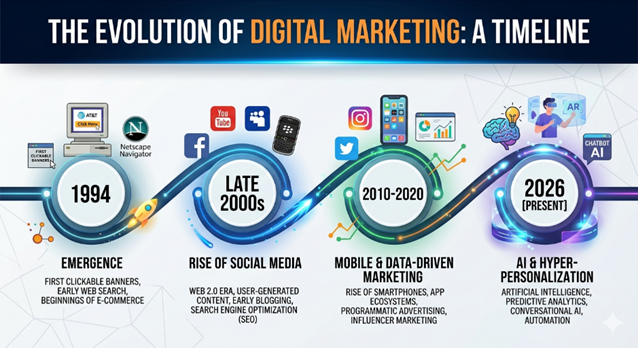
Digital Marketing has changed a lot over years, but it grew through simple steady stages.
- 1994: The very first digital ad appeared, proving that internet could be used for more than just research. What began as a way to share information, quickly evolved into a tool to promote businesses. This evolution laid foundation for the modern digital marketing strategies we use today.
- Late 2000s: Smartphones changed everything by making the internet accessible anywhere. The shift pushed businesses to adapt quickly and build a strong online presence. As a result, digital marketing became necessity rather than an option.
- 2010s – 2020s: Businesses stopped just “selling” and started providing value through useful content to attract potential customers. This opened doors for brands to connect with customers in faster and more interactive way.
- 2026 [Present]: Today Digital Marketing is the most practical way to stay visible and track your performance in real time. With real-time data you can clearly understand what works and what needs improvement. As a results brands can stay relevant in an ever- changing market.
The evolution of Digital Marketing has made it the most affordable and practical way to grow a business in 2026.
DIGITAL MARKETING EXPLAINED WITH EXAMPLES
Let me explain digital marketing in the simplest way possible.
Imagine you own a small bakery. You make really good pastries and cake, but only people who walk past your shop know about it. Now digital marketing is simply the way you use internet to let more people discover your bakery – even if they live 10km away or are scrolling on their phone at home.
In simple words, digital marketing is promoting your products or services using online channels like Google, Instagram, YouTube, Facebook, email, and websites to reach the right customers at the right time.
Here are a few everyday examples that will make it clearer to understand:
When someone searches “best digital marketing course in Bangalore,” a training institute that has optimized its website appears on the first page and gets new student inquiries
A fashion boutique owner posts daily outfit ideas on Instagram. Her followers like, comment, and DM her to buy the same dress. That’s social media marketing.
A teacher creates short YouTube videos explaining difficult subjects. Students watch, subscribe, and later join paid courses.
These simple examples prove that digital marketing is not complicated — it’s just smart communication using the internet.
TRADITIONAL MARKETING V/S DIGITAL MARKETING
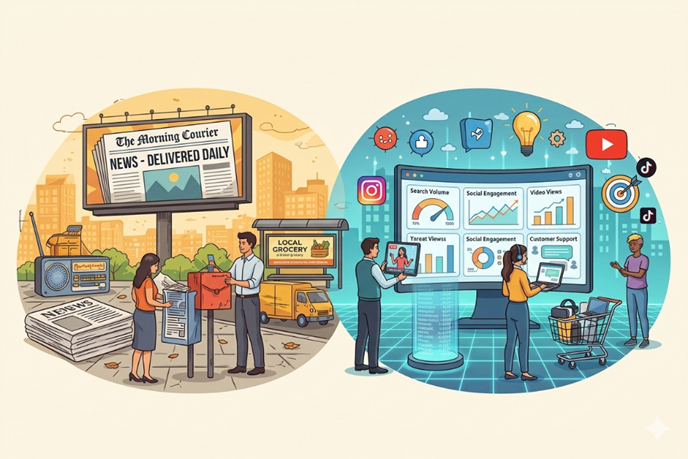
Many people have are confused whether to practice Traditional marketing or Digital marketing.
Here’s the simple truth:
- Targeting v/s Guessing: Traditional marketing is like shouting in a crowd and hoping right people will hear you. Digital marketing allows you to target the right audience specifically based on what they are already searching for.
- Real – Time Results: With traditional ads you often have to wait weeks to see whether they have worked or not. In digital marketing you can measure results in real time and adjust your approach immediately based on what’s best.
- Affordability: Traditional marketing is usually very expensive. A single news paper ad or a TV commercial can cost lakhs of rupees. Digital marketing is much more affordable. You can start with just ₹500–2000 per day and scale as you grow.
- Visibility: People now spend most of their time online – Searching on Google, Scrolling Instagram, Watching YouTube. While traditional ads are easily ignored, digital marketing helps you stay visible.
- Two-Way Interaction: Traditional marketing is one way communication where you talk at people. Digital marketing focuses on building connection, allowing you to prioritize giving useful information and engaging with your potential clients.
- Global Reach v/s Local Limit: Traditional marketing is often limited to a specific physical location. Digital marketing gives you global reach, allowing even a small business to reach potential customers anywhere around the world.
- Sustainability And Content: Unlike a flyer that gets thrown away, digital marketing allows you to create useful content that stays online and continues to build trust overtime.
Understanding these key differences helps you move past the confusion and see why digital marketing is a must for businesses today. It offers an affordable way to target right audience while giving you the advantage to measure your results in real time.
SERVICETYPES OF DIGITAL MARKETING
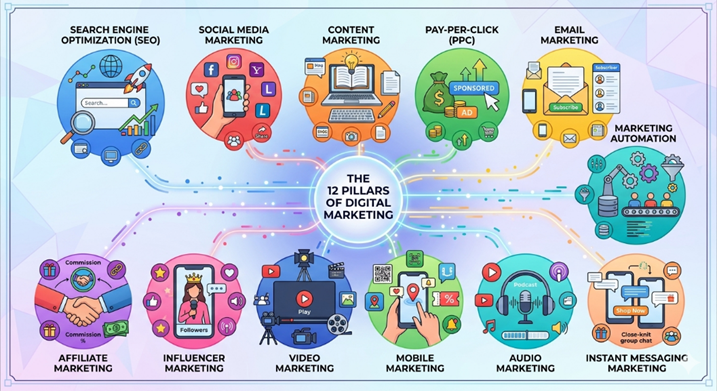
Digital Marketing is an exciting field, but with so many branches, its easy to feel like you’re lost in a maze. To help you move past the confusion, here is a clear and simple breakdown of the 12 types you need to know to build a strong foundation:
- Search Engine Optimization (SEO): The process of making your website appear at the top of Google when people search for keywords related to your business. It’s a practical way to get free traffic over time by being the most helpful answer to user’s question.
- Social Media Marketing: This involves using platforms like Instagram, YouTube etc, to engage with your audience. It’s not just about posting, its about staying visible on platforms where people spend most of their time scrolling and building communities.
- Content Marketing: Instead of just selling you prioritize on giving useful information through blogs and videos. Helping potential clients to solve a problem for free builds a strong foundation of trust. They will most likely come to you when they are ready to buy.
- Pay-Per-Click (PPC): These are paid advertisement which you see on top of Google or on your Facebook feed. You pay a small fee only when somebody clicks on your ad, making it a fast and measurable way to reach the right audience.
- Email Marketing: This is sending direct and personalised messages to people who have shown an interest in your business. Its one of the most effective way to share your updates and grow your customer base.
- Marketing Automation: This is using software to handle repetitive tasks automatically, like sending a ‘Welcome’ email as soon as somebody signs up or posting on social media at a specific time. It helps you stay consistent without having to do much manually.
- Affiliate Marketing: It’s a way to earn money by promoting somebody else’s product. When someone buys a product through your unique link, you earn a commission. It’s a popular way for beginners to start without creating their own product.
- Influencer Marketing: This involves partnering with people who already have a loyal following. As the audience already trust them a recommendation from an influencer will help you reach your potential customers.
- Video Marketing: From short reels to long YouTube tutorials, video is a powerful way to stay visible digitally. You can easily demonstrate how your product works through this.
- Mobile Marketing: This focuses on reaching people’s smartphones through app notifications, SMS or mobile – friendly ads.
- Audio Marketing: This includes ads on streaming platforms like Spotify or being a guest on podcasts. It’s a great way to reach people while they are busy with other tasks like walking, driving etc.
- Instant Messaging Marketing: Using apps like WhatsApp to talk directly with customers. It makes your business feel more human and allows you to answer questions in real time.
Each of these types helps you reach and grow your customer base in real time. So, instead of being confused with the variety, look at it as an opportunity to connect with potential clients.
Skills Needed in Digital Marketing:
Knowing types of digital marketing is one thing, but having the right skills to execute them is where the real growth happens. Let’s look at the simple and essential skills that form real foundation in digital marketing:
- Creativity: In a world of AI and Automation, your human creativity is what makes your business memorable and relatable to your audience.
- Writing Skills: Good writing builds trust. By focusing on giving information through clear and persuasive texts, you make it easy for your clients to understand how you can help them.
- Analytical Thinking: Analysing your performance helps you stay focused on strategies that bring value and stop wasting time on things that don’t.
- Basic Design Skills: Having a skill to create a professional layout or a simple video ensures that your first impression is a strong one.
- Communication Skill: Mastering the art of online conversation helps you understand your customer needs better, allowing you to improve your services in real time.
- Continuous Learning: Since platforms like Google and Instagram update constantly, being open to learn new trends an tools helps you evolve.
Mastering these skills will allow you to move from just posting to actually growing a customer base.
CHALLENGES IN DIGITAL MARKETING:
Now that you know the exciting side of Digital Marketing, I want to share the other side too – the real challenges I have seen and experienced myself.
Like any powerful tool, digital marketing also comes with its own set of challenges. Many beginners and small business owners get excited at the start, only to feel frustrated when things don’t move fast as expected.
Understanding the challenges is the first step to overcome them. Here’s a breakdown of most common obstacles in digital marketing and their solutions:
- Frequent Algorithm Changes: Digital platforms frequently update their algorithms, which can suddenly affect content reach and visibility. Strategies that worked earlier may stop giving results overnight. How To Resolve: Stay adaptable, monitor performance regularly. Keep testing different content formats and prioritize audience – focused strategies rather than quick hack.
- High Competition: With more businesses and creators entering digital platforms, competition for audience attention has become extremely intense. Growing number of content creators makes it harder to stand out and consistently be relevant. How To Resolve: Differentiate by offering unique value and building a strong identity. Focus on niche targeting and create content that directly addresses your audience needs.
- Content Overload & Short Attention Span: Users are exposed to massive amount of content daily. People today prefer quick and easily digestible content, making it challenging to hold their attention for long. How To Resolve: Focus on interactive and visually appealing formats like short videos and carousels. Use strong hooks, engaging visuals and concise messaging to grab attention instantly.
- Data Privacy Rules: Strict privacy laws are making it harder for marketers to track user behaviour and personalize campaigns effectively. With growing concerns about data security, users are more cautious about sharing personal information online. How To Resolve: Focus on ethical data practices and strengthen your own customer data base. Clearly communicate your data policies and prioritize user consent.
- Measuring Real Results: With multiple tools and metrics available, it can be confusing to determine which results truly matter. Analysing performance across different platforms can lead to data overload and unclear insights. How To Resolve: Define clear goals and track only the relevant KPI’s like conversions and ROI. Use simplified tracking methods and focus on measurable performance indicators.
- Staying Updated: Digital marketing tools and trends evolve rapidly, making it challenging to stay informed and up to date. The fast – paced nature of digital marketing requires continuous learning and adaptations. How To Resolve: Focus on learning only the tools and strategies relevant to your goals. Build a habit of regular upskilling and experiment with new features gradually.
Digital landscape moves fast but your foundation must stay solid. Treat every challenge as a lesson and stay patient with your progress. And remember consistency is the most powerful tool.
CONCLUSION:
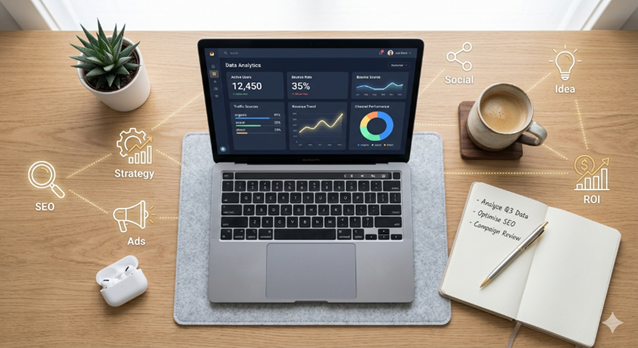
In today’s digital world staying visible online is no longer an option – it’s essential. Digital Marketing is about understanding your audience, providing value and staying consistent over time.
When approached with the right mindset, it becomes one of the most practical and rewarding skills you can develop. Every expert once started as a beginner, learning one skill at a time and improving through practice.
With every post you create and every campaign you analyse, the complex world of digital marketing starts to feel much smaller and easier to manage.
Take the first step:
Choose one skill – whether its content creation or SEO or social media and start experimenting. Stay Consistent, track your progress and keep learning.
The best way to truly understand digital marketing is experiencing it by yourself. So don’t wait. Apply what you have learned and grow with each step.
Did this guide help clear the fog? Share it with a friend who is starting their digital marketing journey!https://business.adobe.com/blog/basics/digital-marketing
FAQ’S:
- Why Is Digital Marketing Important? Digital marketing is important because today people spend most of their time online. It allows you to target specific audience, stay visible, track your results in real time and adjust your strategy easily, making it one of the most efficient ways to grow a business.
- Is Digital Marketing Better Than Traditional Marketing? Digital marketing is often considered better as it is more affordable, measurable and allows you to target right audience. It lets you adjust your strategies instantly making it more flexible and efficient. However, traditional marketing can still be effective for local reach and brand awareness.
- What Is The Scope Of Digital Marketing? The scope of digital marketing is very wide, as almost every business today needs an online presence. This creates an endless opportunity for jobs, freelancing and even start your own business.
- How To Start Digital Marketing As A Beginner? Start by learning the basics of digital marketing. Pick 1-2 areas like SEO or Social media marketing. Practice by creating content, experimenting and improving based on your results.